“If things don’t come the way you want, want them the way they come.”
In tech, experts have a way of articulating how technology integrates into societies. The Technology Adoption Lifecycle divides adoption in five phases:
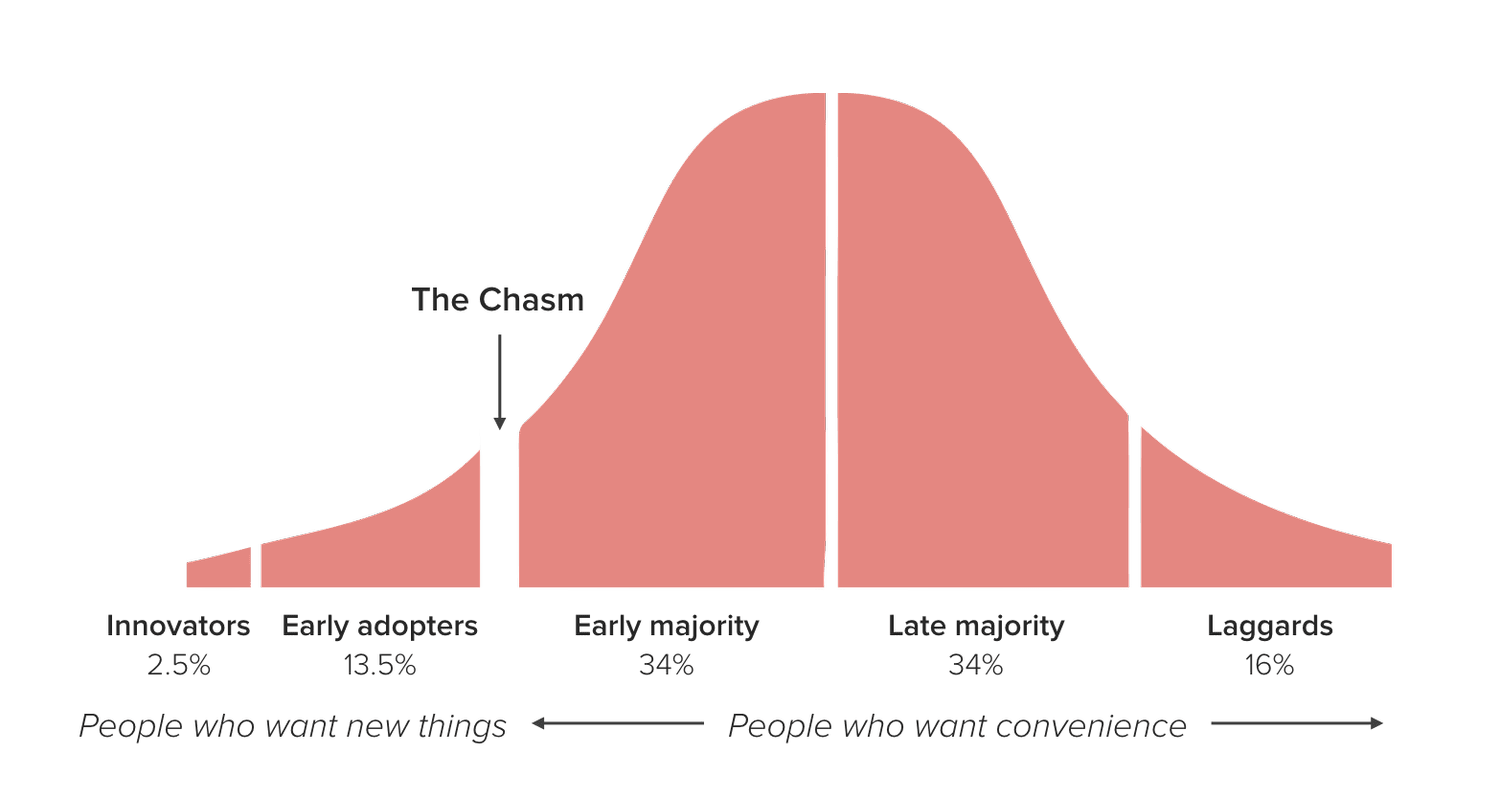
The idea of the curve is there are a small percentage of innovators that pave the way towards early adoption. As awareness and applications become more apparent, technologies “cross the chasm” into the broader ecosystems. It’s usually at this moment that adoption drastically accelerates. There’s a race to understand, implement, and gain a competitive edge with the technology. Usually, users on the wrong side of the curve feel behind or feel pressure to catch up.
The Internet is an incredible example of this. As consumer access to the Internet expanded in the mid-1990s, some people thought the Web was a fleeting fad. The dot-com era made the Internet mainstream and thus “crossed the chasm”, leading to accelerated broadband investment and server expansion. Then, in the 2000s, we began to see websites everywhere (necessary back then, but unimpressive by today’s standards), shining light on brand new economies like e-commerce, software, and online communication. By the 2010s, having a good website and application wasn’t just a nice to have. It was core to any institutional offering, whether it be education, government, software, or e-commerce. Users demand a good web experience today, and a slow, outdated experience can be costly to revenue, brand, and reputation.
AI is experiencing its own adoption curve moment right now, and frankly, the adoption gap feels like it’s widening faster than ever before. For one, AI development is unusually iterative, meaning as users establish bearings on how to best leverage AI, new models, tooling, or workflows tend to force users to re-educate themselves on what “good” AI best practices look like. Second, the space is moving lightning fast, and that can feel crippling. Every month we hear about a new ultra-capable model, and as tooling has become more sophisticated, adopters and skeptics are increasingly questioning where AI fits into bigger picture topics like our job market, policy and legislation, and geopolitical advancements.
I certainly do not have all the answers, but I do have a developing perspective.
My Foundational Perspective
I have a somewhat “accidental” front-row seat to the AI transformation. In 2016, I was a graduating senior from Santa Clara University, eager to put my finance degree to use. After many failed interview loops for corporate finance roles, I was fortunate enough to get a referral from a friend at a hot new startup in San Francisco to work in their sales department. I ultimately accepted an entry-level position at a company called Cloudflare.
For context, Cloudflare accelerates and protects over 20% of the world’s Internet traffic. In layman's terms, we stop the “bad guys” from overwhelming servers and attempting to steal critical, personal information. We also make sure that, through our global network, the general Internet population gets fast access to web applications. The majority of our millions of our customers do this for free today. I’ve spent nearly a decade at the company, and as I reflect, it’s a bit crazy just how much the Internet has evolved. For example, today we’re seeing less human and more “agentic” (think AI models that solve complex tasks using multiple tool requests or tools) Internet traffic than ever before.
Fast forward to 2026, and I’ve moved into a team that has focused solely on supporting our AI and developer platform business. Stripping out all the tech jargon, my job is to run initiatives and projects that grow a healthy and sustainable AI-led business at Cloudflare. Our team helps customers adopt developer and AI tools to build and scale their applications. This includes helping users access models, agents, and other primitives that supercharge their apps. We work with thousands of customers, from individuals and students, to startups and massive corporations.
I was fortunate to step away from the fast-paced AI landscape in April 2026 and spend three months with my son on paternity leave. In that time, I got to deeply experience one of God’s greatest gifts to its fullest: parenthood. Over the course of the last few months, we went on walks, played outside, and spent a lot of time with family. Making sure I was staying up to date with the latest and greatest models, I decided to spend some time trying to use these tools to build web applications, so between his naps and after bedtime, I began to build using a chatbot experience. Some applications I use daily, some are still a work in progress, and a ton were failed ideas, but it was a wild and liberating experience to finally see some ideas I’ve had for years come to fruition. I don’t have a traditional coding background, and now I don’t need to. AI can write the code, and I can deploy applications that I only dreamed were possible six months ago. In my opinion, the AI experience has been really magical.
Even so, as a participating Orthodox Christian and new parent, I’ve been wrestling with where this is all heading. Some days it can feel incredibly empowering and cutting edge. Other days it can feel overwhelming and deflating. What does this mean for the job market? What should my son study? How should he study? Will humans struggle or prosper with more of these tools at their disposal? Is “being human” more at risk than ever?
I’m not here to blindly advocate for the benefits. In many places, I share concerns with skeptics. The reality is that outside of my tech bubble, many everyday people are apprehensive and nervous about AI development, and I feel it’s important to help skeptics who don’t know much about the technology better understand the tooling. I’ve been leveraging AI a lot both at work and outside of work, but before sharing what I’ve learned, I think it’s important to understand the foundations of what AI is.
An AI Primer
Believe it or not, the concept of artificial intelligence has been around for decades. In 1950, mathematician and computer scientist Alan Turing published a groundbreaking paper called “Computing Machinery and Intelligence.” The paper introduced what later became known as the Turing Test. Originally referred to as “The Imitation Game” (the same Imitation Game referenced in Benedict Cumberbatch’s 2014 film), the goal of the Turing Test was to propose a thought experiment and evaluate whether a machine can exhibit human-like behaviors. The test asked whether a human evaluator, communicating through text, could reliably distinguish between another human and a machine.
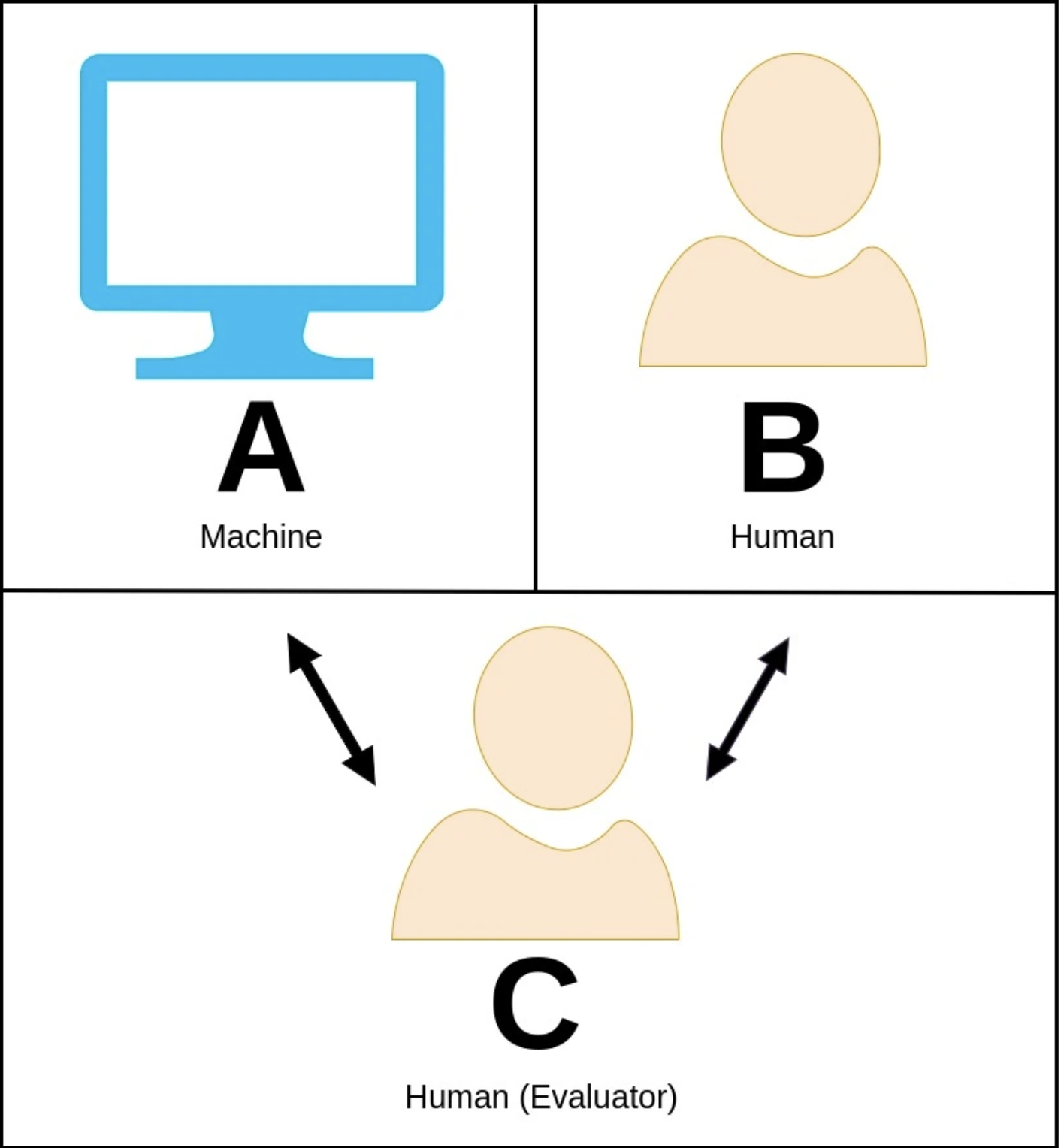
Rather than trying to define whether a machine could “think,” Turing proposed a more practical question: could a machine imitate human conversation well enough that an evaluator could not reliably distinguish it from a human?
When people are asked about AI today, they often think of Generative AI. The fact of the matter is that companies have been using machine learning models for almost 20 years now in the form of Predictive AI. For example, Cloudflare has used predictive AI for years to protect against malicious bots scraping and attacking websites, and the foundations of the bot mitigation logic stem from years of malicious attack pattern analysis comparing good and bad bots. Statisticians, machine learning researchers, and intelligence teams spend a lot of time and energy training models to anticipate and predict patterns, using probability to predict an action.
On the other hand, Generative AI became mainstream in 2022, despite being around for years. ChatGPT dropped in November 2022, giving consumers their first experience with a Large Language Model (LLM). I still recall sitting at the dinner table during the Christmas season, in absolute awe that this technology could dynamically respond to me so quickly with curated answers to my eclectic questions.
Simply put, Generative AI allows users to write in natural language to an LLM and generate an output. Common output forms include text, images, videos, and other forms of content based on what the user is requesting. We’re also beginning to see complex Generative AI applications take shape, allowing users to generate an output through a multimodal response. For example, a user writes text to generate an image, and that image is then used to generate a video, all within one request.
How AI Works
So how do people actually build Predictive and Generative models? In simplified terms, companies and individuals train models on a huge corpus of data. The primary goal of training isn't to memorize that knowledge in a vacuum, but instead to identify and learn patterns and relationships across enormous datasets. Think of a musician who writes thousands of songs and can play a melody on the fly instead of memorizing each note before playing.
Once trained, the model uses inference when requested. During inference, the model takes the input, breaks the prompt up into a unit of measure called tokens, and tries to provide a meaningful output based on how it was trained. Words and concepts are represented mathematically, allowing the model to learn relationships among them. During inference, an LLM uses the patterns learned during training to predict what token should come next. Because the model predicts what is statistically most likely rather than looking up factual details in a verified database, it can sometimes produce confident but incorrect answers. This is commonly referred to as a "hallucination."
Closed vs Open-Source
You may have heard the term “open-source” but may not know what it means. A closed-source model is probably what most casual AI users engage with today. Like most software companies, nobody can see the code under the hood or understand how the model was built or operates. GPT (OpenAI), Claude (Anthropic), Gemini (Google), and Grok (X.ai) all run closed-source models. It’s the frontier labs’ secret sauce, competitive edge, and way they add value, keeping users in their applications and environments.
Open-source is on the other side of the spectrum. Imagine you can see the source code of how a model is built. With open-source, you can run the model either through your own applications or services or self-hosted on your own devices locally. Open-source allows you to deploy the software as is, or “fork it” and customize the experience further. Self hosting allows users to run more private, secure environments on their own hardware. Open-source is incredibly important as it is oftentimes cheaper and allows for other developers to customize their experiences. It makes for good competition, applying pressure around model pricing, performance, and customization. Very popular open-source models today include Kimi (Moonshot), GLM (z.ai), Qwen (Alibaba), and DeepSeek.
Ironically, there’s a geopolitical divide forming between open and closed-source. The leading closed-source providers listed above are all based in the United States. Conversely, the four open-source providers listed above are based in China. Some criticisms of the closed-source community are that there should be more transparency around how they build and operate their models for the betterment of the AI community. While many licensing and publishing agreements are now in place, questions also remain about whether some early training data was used without fairly compensating original creators. While open-source has been favorably supported in the community, an interesting debate in the western world has been around the safety of using Chinese-based models. While using these model providers directly poses dialogue around data sovereignty risks, the beauty of open-source is that users often run models on their own hardware, contain the experience in their own environments, and can evaluate the source code. This means they control where their data goes and flows, allowing users to safely use open-source models.
Where is AI Heading?
The primary medium that users consume AI today is through mobile and desktop applications, but agents are becoming an increasingly popular way in which society uses AI. An agent can use tools and take multiple steps toward completing a task. An agent can follow many subsequent steps to fulfill a broader task. Take the example of buying groceries online. An agent can open an application, select your items based on your preferences, customize what to replace if they aren’t available, confirm your address, input your credit card, and purchase, all within a request. Agents are also offering huge economic leverage to companies. Some workers are managing multiple (sometimes hundreds) of concurrent agents to run complex tasks like code review, debugging, scheduled reporting, emails automation, internal tools, and so much more.
While it’s hard to estimate where the future of AI is heading, some experts predict the next major iteration of AI that society will experience is Artificial General Intelligence (AGI). In simple terms, Artificial General Intelligence (AGI) refers to AI systems capable of performing a broad range of intellectual tasks at or above human levels. Many researchers believe these systems will rely heavily on agents that can recursively evaluate and improve their own work, though experts continue to debate both the path to AGI and its timeline.
Putting It All Together
So why does all this matter? I feel that breaking down the components of AI and understanding how these tools come together can help many people understand the capabilities, shortcomings, opportunities, and risks. At its crux, I believe that AI can mathematically infer, while humans practice discernment. That distinction has become the lens through which I evaluate the opportunity and risks of artificial intelligence. While my perspective continues to evolve, here are some of the observations I've made as both a father and an Orthodox Christian.
AI is probabilistic, but lacks discernment
Fundamentally, AI is optimized to solve a user's problem. The way it does so is by reading a user prompt, using patterns learned during training, and stringing together an output meant to satisfy its user (whether that be a human, or another agent). While you see words, an image, or a video as your output, it’s actually really complex math that’s taking place under the surface. Using an example prompt for an image:
“Generate an image of a golden retriever wearing sunglasses running on a beach into the sunset”
In a highly simplified and illustrative example, words in the prompt might be represented mathematically under the hood like:
“golden retriever” → [0.82, 0.14, 0.67, ...]
“sunglasses” → [0.31, 0.91, 0.22, ...]
“beach” → [0.74, 0.28, 0.63, ...]
“sunset” → [0.68, 0.45, 0.89, ...]
But all a user sees is the output. While AI can feel like it’s getting more personal and humane, at the end of the day, LLMs are ultimately mathematical systems that learn patterns from enormous amounts of data. In his landmark 1950 paper, Alan Turing reframed the question "Can machines think?" into what became known as the Turing Test: Can a machine act indistinguishably from a thinking human? When you look at AI from the angle of how the systems operate, I think it demystifies the extreme, scarier narratives personifying AI, like “AI can think” or “AI is a superior entity.”
Most importantly, the Orthodox Church teaches that human discernment is far more than probabilistic inference. While both AI and humans can make many complex decisions, there's another layer of discernment that I strongly believe mathematics and system prompts alone cannot achieve. Human discernment draws not only from information, but lived experience, conscience, relationships, moral responsibility, free will, and communion with God.
AI generates while humans refine
Generative AI tends to err on the side of, well, generating. When I ask AI to revise an existing project, I noticed that sometimes AI likes to generate new assets in that project instead of editing the old files, and will really only edit existing files if I explicitly say so. I’ve even noticed that when I am trying to build a web application, generative AI likes to inject newly generated code instead of sometimes refining that existing code. Without proper coaching, AI tends to be wordy, whether it's in a chat response back to its user, or the communication generated on an app that I build. Now this probably will get better as AI tooling improves, but I do think that there’s a theme that AI likes to generate (the phrase “AI Slop” comes to mind).
This is where I feel humanity shines. We’ve been inventors for thousands of years, but invention doesn’t always mean “generation”. Take the car for example. We’ve refined the automobile for over 100 years. The concept is the same, and aside from technology to improve the speed, safety, technology, and engine, reinventing a totally newer automobile that is drastically different, bigger, and broader just wouldn’t make sense. Software engineers sometimes hit a productivity wall when working with AI coding agents, feeling like their outputs hit diminishing returns. While it’s great that AI can improve coding productivity, there have been instances where, without meaningful coaching and intervention, AI can lack the overarching technical strategy, and code added can result in the applications suddenly slowing down or breaking. Again, this will improve over time, but I feel humans have an upper hand when it comes to reasoning with the overall objective, pivoting, and refining output over time.
It has never been easier to build
In late 2025 and early 2026, AI hit a heightened capability level when a few models (Opus 4.5, GPT 5.2, Gemini 3, and Kimi 2.5) redefined how humans can learn, build, and work. That should be a good thing. It’s never been easier to get a nuanced answer to a nuanced question. Heck, I had my fair share of moments using ChatGPT during my first few months of parenthood, and while I didn’t take its responses as gospel, it did help coach me through a few insecure and unsure moments. It’s also never been easier to describe a problem and end up with a website or application with a solution.
The beauty is for non-traditional developers, you don’t really need to know how to code in order to build. You just need to choose a tool, offer a bit of creativity, and be willing to iterate. For anyone who feels paralyzed by the space, a great place to start is to simply define a problem or a task you don’t like to do that AI could help you with. If you haven’t tried to build something yet, I’d encourage you to give it a shot, as the experience may pleasantly surprise you.
With great power comes great responsibility
While I do believe AI is a net positive to society, there are bad people in this world who want to inflict a lot of harm. We’re at an inflection point with this technology, and we need to critically think about what direction we as a society want to head. AI is here to stay, and it’s not going anywhere. We should do our best to leverage these tools to make us more productive, solve mundane problems that may bog us down, and use our free time to spend it doing what we love.
That being said, there is conflicting signal on where AI leaves the job market in the next few years. While I have no clue if job creation will outweigh job consolidation, I do think AI provides incredible tools that will spawn a new wave of self-starters and entrepreneurs. For generations, many of us were taught to study a trade and get a job in that specific field. While skilled labor will remain essential, I do think that career lines and responsibilities will blur over time, and the barrier to entry has never been lower in some cases. I really think we need to focus on empowering the next wave of students to critically think and teach them how to safely use these tools, knowing that the ability to use these tools responsibly will likely become a necessary skill in the future.
We also need to be vigilant on how we use AI. Security researchers have demonstrated that increasingly capable models can identify vulnerabilities and perform sophisticated cyber tasks, raising legitimate concerns about how malicious actors may use these tools. There is evil out there, and we need to bulletproof our systems and processes from malicious actors. As technology takes on more responsibility around us (i.e. self-driving cars, medical devices, etc), it’s critical we take the necessary steps to prioritize security and privacy. Moreover, AI is spawning a whole new collection of applications that are dangerous, including AI companionship, deepfakes, theft, and malware. Being vigilant on where we go on the Internet and how our loved ones interact is important because we are entering a new era on the Internet.
Lastly, sometimes what we need most is to simply be human. I’ve ironically gotten the best utility out of AI when I close the laptop and step away for a few hours. Calling my parents, grabbing a coffee with a friend, going to church, and being a parent for my son is more important now more than ever. We are taught at an early age that the Church is not a building, but a congregation in communion with God. By that measure, we should congregate early and often.
Personally, I think AI has helped me better acknowledge and celebrate all that is beautiful in God’s world. Disconnecting to reconnecting is powerful. It’s crucial we continue to celebrate and engage with human art, whether created “analog” (i.e. purely by hand and brain) or with the help of AI. The key is maintaining physical and mental balance with these advancements. If we use the tools responsibly, we have the opportunity to achieve more creative, economic, and social freedoms, allowing us to spend more time both for and with each other. But if we are not careful, we run the risk of losing ourselves entirely.
We could use more (generative) good in the world
Weeks before my son was born, I had this idea of creating a yearly playlist of songs that memorialize what it is like for my son to go through that specific time in his life. My hope is that over time, he will return to the playlists, and the songs can serve as little lessons, offering sustainable connection with himself, my wife, and me. So the week of his due date, I finalized a 20-song playlist (paying homage to my burned CDs era), eager to play it for him on his drive home from the hospital.
While I felt validated to have successfully built an eclectic playlist composed of Bob Marley, The Foo Fighters, and the Lion King Soundtrack, I quickly realized that there was a more meaningful way to round out this gift: put the playlist into a children’s book. So I went to ChatGPT, shared a newborn image of my son, and proceeded to generate goofy cartoon images. I will admit, I have zero experience making children’s books, but I found the process surprisingly easy and fun. I’d simply describe a scene to drop my cartoon son into, a lyric of a song from that playlist to capture the meaning of the track, and voila. A week and 20 pages later, my son now had a customized book that goes hand-in-hand with his playlist.
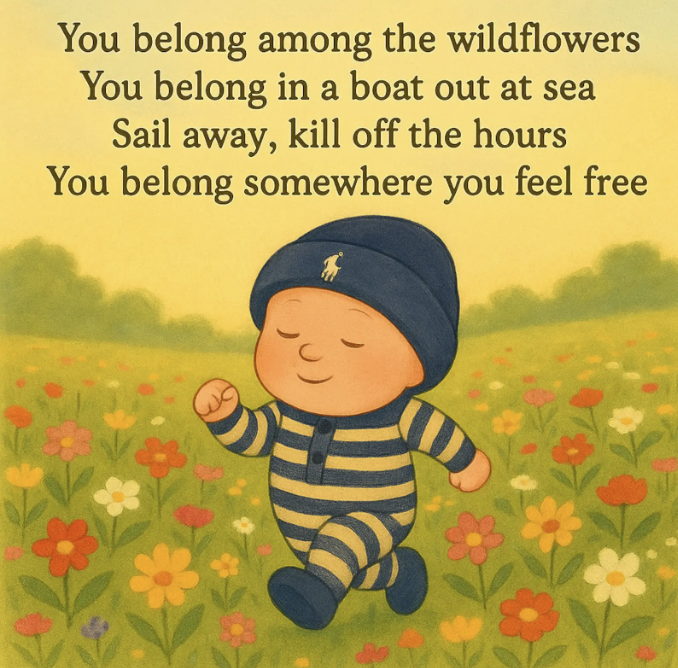
In many ways, that experience blew my mind more than the many crazy AI developments that have come out in the last few months. Not because of how difficult the task was, but actually the opposite. It was really easy to do something good for my son. And while it’s taken a bit of a perspective shift on my part, I’ve learned there are other positive ways to generate good in my life.
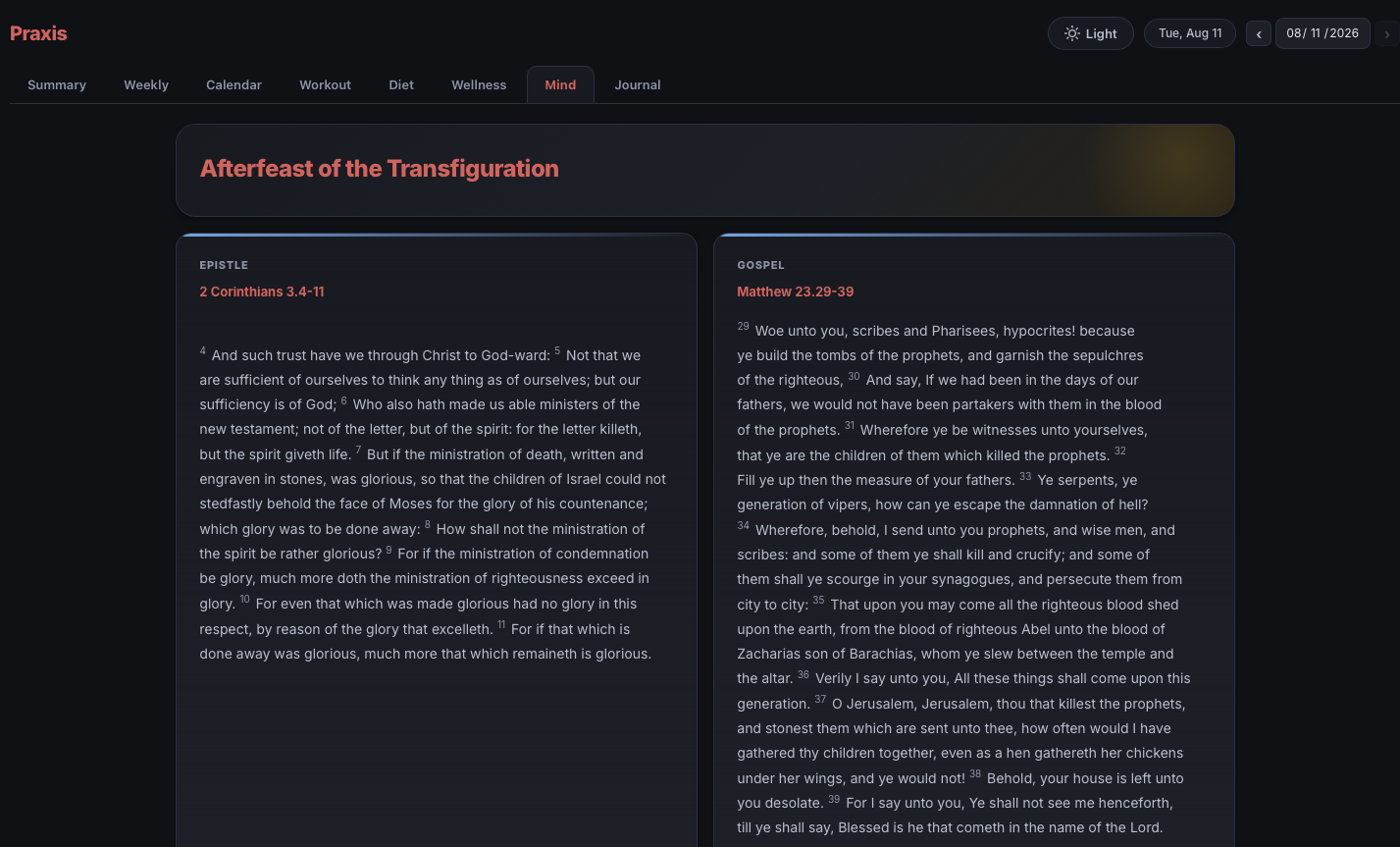
Since paternity leave started, I wanted to get in more shape, and built a custom-tailored AI application (called Praxis, or πρᾶξις) that is only exposed to me. The process was really easy and took two days to prototype with an additional two weeks of semi-frequent updates to the interface. On top of workout and meal plans, the application allows me to log meals, workouts, and wellness related information. I even have a “journaling section”for me to share how I’m feeling that day, and a “Mind” section which shows the Orthodox reading of the day.
I’ve also thought about how AI can bridge the gap on bigger projects that I’ve always wanted to do. My parents have a decorated background, one that I really want to document. It’s never been easier to record their past, so I took to AI to help me buy recording equipment and generate the first pass at a long-form interview plan. That now means I get to focus on the best part: long-form dialogue with my parents.
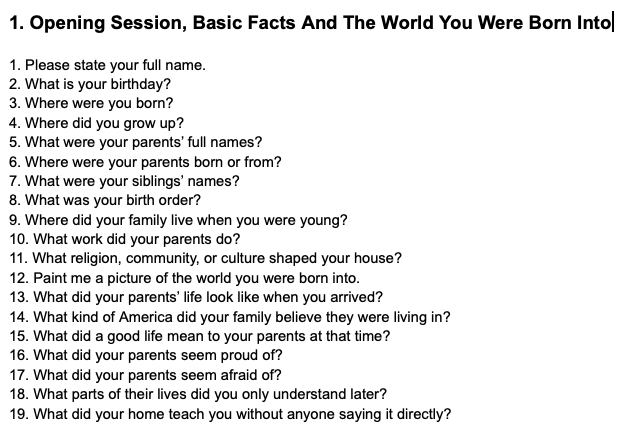
It’s true that there are notable downsides to AI, but I do think there’s an oftentimes underrepresented flipside to the coin. What if, knowing that these tools are here to stay, we could use them to improve how we live and how we treat each other? The possibilities are endless: An app to remind you of your friends birthdays that also recommends the ideal gift to get them. A customized guide to take on a new hobby like painting or baking. An interactive game that kids can play to study for a test. It can be hard at times to consider these tools in this light, but as people begin to build muscle memory, I believe we’ll begin to see so many improved ways to learn, inspire, and improve society as a whole that was simply prohibitive in the pre-AI era.
“Generating” good behaviors with AI definitely applies to our Orthodox Church communities. In my experience, ministries can feel blocked by operational burdens like planning, scheduling, budgeting, educational materials, and other operational work. AI can drastically reduce operational burden so parishioners and clergy in the trenches can focus on the highest impact work, which is serving the Church. Communication around mailers, donation requests, and volunteer outreach can take a lot of effort, so much so that it may prohibit churches from achieving engagement goals with parishioners. Proper AI tooling can take most of the bottlenecks away and even help churches communicate more consistently and thoughtfully with different groups within their communities.
I do think building the confidence to make changes like this will take time, and I advocate against “sloppy” AI usage to finish something at the expense of the quality of the task. Change requires real consensus, but if we choose to learn how to leverage these tools responsibly, I think people will begin to see the art of what's possible. And in a world that could use good now more than ever, AI can allow us to spend more time serving and supporting each other.
-----------------------------------------------------------Some fun projects that I’ve built over the past few months:
- crotas.me: My personal website with portfolio.
- andieroy.com: A place for my years of music production and the long-form DJ mixes to live
- Taxidi.io: Travel logging platform allowing users to post, follow, and share trips with friends
- agentsmd.me: A simple tool that helps non-technical folk tailor their preferences and output style with AI and agents
- Praxis: Personalized fitness tracking, macro logging, and journaling app with WHOOP integration
- Island Pact: A multiplayer social strategy and elimination game with live audio (think "Survivor" built for the browser)
- Family Interview Project: A structured plan to record and edit a long-form interview series with my parents
- Children’s book: Created a book to pair with my son’s “Welcome to the World” playlist after he was born.